
Losing brand deals is defined by one core failure: not demonstrating commercial usefulness to a brand's internal decision-makers. Follower count, aesthetic quality, and even strong engagement numbers rarely save a creator when brands cannot quickly answer four questions: Who does this creator reach? Why does our product fit their audience? What will they deliver? How will we measure results? Understanding why creators lose brand deals means understanding how brands think, not just how content performs. The factors losing brand deals are commercial, legal, and behavioral. All of them are fixable.
Why creators lose brand deals before the first meeting
Brands evaluate creators on six key factors beyond follower count: audience fit, content fit, trust and proof of results, brand safety, professionalism, and measurable outcomes. A creator with 50,000 highly engaged followers in a specific niche consistently outperforms a creator with 500,000 passive followers when the niche matches the product. Brands are not running popularity contests. They are managing marketing budgets with real accountability.
Content synergy matters just as much as audience size. A brand selling premium kitchen equipment wants to see that a creator naturally integrates products into their content, not that they can read a script. Brands scan creator feeds quickly, and forced integrations are obvious. If your content does not make a product feel native, the partnership will feel transactional to both sides.

Brand safety and professionalism concerns filter out more creators than most realize. Brands check whether a creator has clear contact information, a professional pitch, and a history of consistent behavior. Missing any of these signals that working with you will create friction. The reality of influencer marketing in 2026 is that brands have more creator options than ever, so they default to the path of least resistance.
Here is what brands look for in a pitch:
- Audience clarity: Demographics, location, and psychographic fit with the brand's customer profile
- Proof of engagement quality: Comments, saves, shares, and click-through rates rather than raw follower numbers
- Product fit narrative: A brief explanation of why the product belongs in your content world
- Deliverables and timeline: Specific post types, quantities, and deadlines
- Measurement plan: How you will report results after the campaign
Pro Tip: Build your pitch around the brand's internal approval process. A brand manager has to sell your partnership to their team. Give them the exact language to do that: audience alignment, product fit, and measurable outcomes in three sentences or fewer.
How morality clauses end deals without warning
Morality clauses grant brands near-unilateral termination rights based on broadly defined conduct that could harm their reputation. These clauses allow termination without court proceedings and typically cover conduct bringing "public disrepute" or content that could "shock or offend the community." The language is intentionally wide. Brands use it as a fast exit when a creator controversy surfaces, regardless of whether the behavior directly relates to the partnership.
The triggers are broader than most creators expect. Morality clause disputes often involve gray areas like off-platform conduct, resurfaced old content, or statements made in personal contexts. A tweet from three years ago can activate a clause signed last month. Brands act quickly to protect their reputation, and the vague language in most boilerplate contracts gives them the legal cover to do so.
The practical steps to protect yourself before signing:
- Read every clause word for word. Generic language like "conduct unbecoming" or "community standards" is a red flag. Ask for specific definitions.
- Audit your own content history. Search your name and handle for anything a brand's legal team might flag before they do.
- Negotiate mutual clauses. If a brand can exit for reputational reasons, you should be able to exit if the brand's own conduct damages your audience's trust.
- Set behavioral boundaries in writing. Define what types of content or statements fall outside the scope of the partnership to prevent misinterpretation.
- Get legal review on any deal above a threshold you set. For deals above a few thousand dollars, a one-hour legal consultation is worth the cost.
Brands increasingly treat morality clauses as deal-critical risk management tools, not boilerplate. Creators who treat them the same way are far less likely to face sudden terminations.
Pro Tip: Treat reputation management as ongoing operational work, not a one-time cleanup. A monthly audit of your public content and social footprint takes 30 minutes and removes the element of surprise when a brand's legal team runs their own check.
Why poor communication kills rebooking chances
Creators who miss deadlines, go silent after payment, or fail to share campaign performance data are typically not rebooked. This is one of the most common reasons creators fail to build long-term partnerships. Brands coordinate campaigns across multiple channels, agencies, and internal teams. A single missed deadline creates a cascade of problems that the brand's team has to solve without you.
The financial and reputational cost to the brand is real. When a creator goes dark after receiving payment, the brand loses both the content and the budget. That experience gets remembered. Brands track reliability formally through agency notes and informally through the memories of marketing managers who make rebooking decisions.
Sharing campaign data closes the loop and opens the next deal. Sending a post-campaign recap with concrete metrics within 48 to 72 hours of a campaign going live signals professionalism and genuine investment in the brand's outcomes. Include engagement rate, reach, saves, link clicks, and any direct feedback from your audience about the product. This is the single most underused tactic in creator-brand relationships.
What reliable communication looks like in practice:
- Confirm receipt of the brief within 24 hours of receiving it
- Send a check-in update at the midpoint of the production timeline without being asked
- Flag any delays immediately rather than going silent and hoping the deadline shifts
- Deliver a post-campaign report with metrics, screenshots, and a brief interpretation of results
- Follow up 30 days later with any organic performance data that continued to accumulate
Pro Tip: Create a simple post-campaign report template you can fill out in 20 minutes. Include reach, engagement rate, saves, and one quote from your audience comments. Brands rarely receive this level of detail unprompted, and it makes you memorable for the right reasons.
Hidden deal structure pitfalls that cost creators money and opportunities
Vague deliverables, broad usage rights, exclusivity clauses, and underpricing trap creators in deals that cost more than they pay. A creator who accepts a flat fee without defining the scope of usage rights may find their content running in paid ads for 12 months without additional compensation. That is not a bonus for the brand. It is a transfer of value that the creator gave away without realizing it.
Understanding deal structure risks is one of the most practical steps in avoiding brand deal pitfalls. The table below illustrates the most common structural problems and their consequences.
| Deal structure issue | What it costs you |
|---|---|
| Undefined usage rights | Your content runs in paid ads or on third-party platforms without extra pay |
| Broad exclusivity clauses | You cannot work with competing brands for months, blocking better offers |
| Vague deliverables | Brands request unlimited revisions or additional posts not in the original scope |
| Underpriced flat fees | You absorb production costs, revision time, and reporting labor with no adjustment |
| No kill fee clause | A brand cancels after you have completed work and owes you nothing |
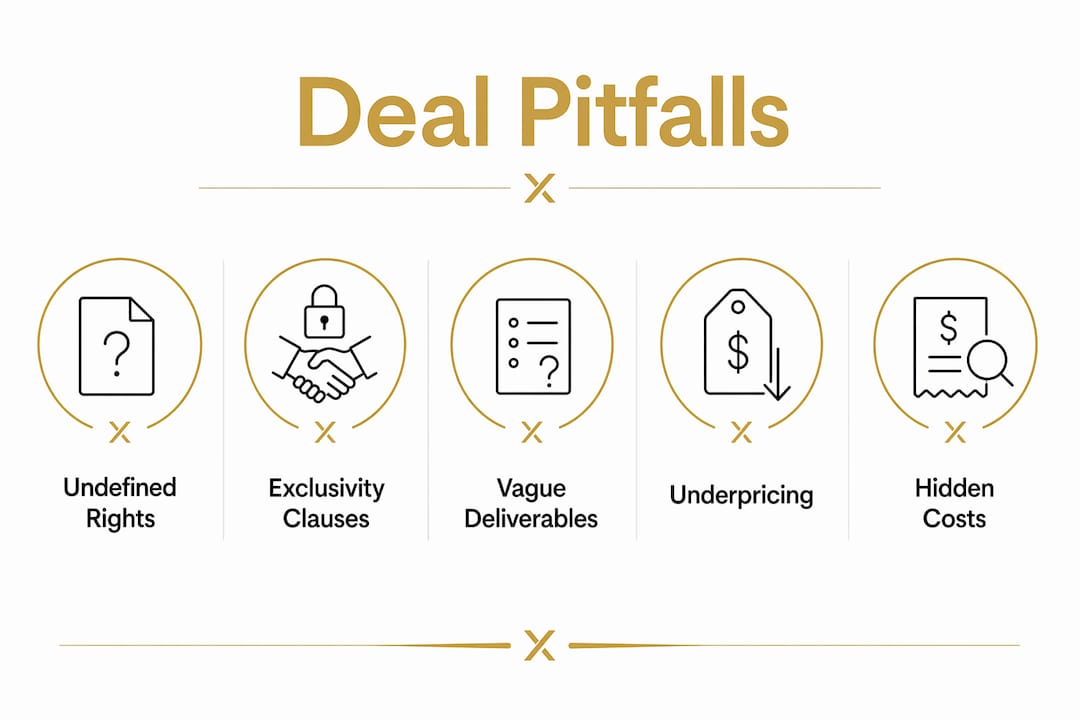
Exclusivity clauses deserve particular attention. A brand asking for 90-day category exclusivity in exchange for a single post fee is asking you to turn down every competitor deal in that window. Price that into your rate or negotiate the exclusivity window down to 30 days. Brands often accept shorter windows when asked directly.
Pro Tip: Before signing any deal, list every deliverable you will produce, every platform the content might appear on, and every category of competitor you would be blocked from working with. Price each item separately, then combine them into your total fee. This prevents scope creep and makes your rate defensible.
Does calling yourself an "influencer" cost you deals?
Brands favor partners who demonstrate unique contributions and clear return on investment over creators who lead with an influencer label. The word "influencer" carries baggage in 2026. Brand managers associate it with transactional relationships, inflated metrics, and reputational risk. Creators who position themselves as content partners, media producers, or audience specialists get further in conversations with brand decision-makers.
This is not about semantics. It is about the commercial frame you present. A creator who says "I produce video content for an audience of 35-to-45-year-old homeowners interested in sustainable living" gives a brand something to evaluate. A creator who says "I am a lifestyle influencer with 80K followers" gives a brand a number to compare against a spreadsheet.
Repositioning your value proposition involves a few concrete shifts:
- Replace "influencer" with a description of what you produce and for whom
- Lead with audience specifics rather than follower totals in every pitch
- Include one or two past campaign results with real numbers in your media kit
- Frame your content as a media channel with a defined audience, not a personal brand seeking sponsorship
Building your pitch around the brand's internal approval workflow reduces their risk and makes the partnership easier to greenlight. Brands do not just choose creators. They approve budget allocations. Make that approval easy.
Key takeaways
Creators lose brand deals when they fail to demonstrate commercial usefulness, manage reputational risk, and maintain the professional communication standards brands depend on to run campaigns.
| Point | Details |
|---|---|
| Commercial fit beats follower count | Brands prioritize audience alignment, content synergy, and measurable outcomes over raw numbers. |
| Morality clauses are deal-critical | Audit your content history and negotiate clause language before signing any contract. |
| Post-campaign reporting drives rebooking | Send a metrics recap within 48 to 72 hours of going live to signal professionalism and secure renewals. |
| Deal structure protects your income | Define usage rights, exclusivity scope, and deliverables in writing before agreeing to any fee. |
| Drop the "influencer" label | Position yourself as a content partner with a defined audience and measurable outcomes to stand out. |
What I have learned about creators who keep winning deals
After watching hundreds of creator-brand relationships play out, the pattern is clear. The creators who keep winning deals are not the most talented or the most followed. They are the most predictable. Brands are risk-averse organizations. Every time they work with a creator, they are betting budget, time, and reputation on someone outside their direct control. The creators who get rebooked are the ones who make that bet feel safe.
The commercial logic game is not complicated, but most creators never play it. They focus on content quality and audience growth while ignoring the operational side of partnerships. Missed check-ins, vague contracts, and no post-campaign data are not minor oversights. They are signals that tell a brand's marketing team you are not worth the coordination effort.
The hardest lesson I have seen creators learn is that a brand is not a fan. A brand does not care about your creative vision unless it translates into their business outcomes. The creators who internalize that early stop losing deals and start building the kind of long-term partnerships that fund real careers. Treat every brand like a client, not an audience member, and the rebooking rate changes fast.
— Brian
How Blackx helps you stop losing deals
Losing deals to avoidable mistakes is a solvable problem. Blackx is the contract intelligence layer for the creator economy, built specifically to give creators the infrastructure they need to manage deals with the same professionalism brands expect from agencies.

With Blackx, you get clear deliverable tracking, usage rights documentation, and morality clause review built into every deal workflow. The platform helps you send post-campaign reports, flag deadline risks before they become problems, and understand exactly what you are agreeing to before you sign. Creators using Blackx's deal infrastructure stop losing deals to communication gaps and contract confusion. If you want to build brand partnerships that renew, the right infrastructure makes the difference. Explore Blackx for creators and see how contract clarity changes the conversation.
FAQ
Why do creators lose brand deals despite strong metrics?
Brands evaluate creators on audience fit, content synergy, professionalism, and measurable outcomes, not metrics alone. A creator with strong numbers but poor audience alignment or unreliable communication will still lose deals.
What is a morality clause in a creator contract?
A morality clause grants a brand the right to terminate a deal if a creator's conduct could harm the brand's reputation. These clauses often cover off-platform behavior and resurfaced old content, making pre-deal audits critical.
How does post-campaign reporting affect rebooking?
Sending a post-campaign recap with engagement, reach, and click data within 48 to 72 hours of going live significantly improves rebooking chances. Brands track reliability, and proactive reporting is the clearest signal of professionalism.
What deal structure mistakes cost creators the most money?
Accepting broad usage rights for a flat fee and signing wide exclusivity clauses without pricing them in are the two most costly mistakes. Both transfer significant value to the brand without fair compensation.
Does calling yourself an influencer hurt your chances of getting brand deals?
Brands increasingly favor creators who position themselves as content partners with defined audiences and clear ROI over those who lead with an influencer label. Repositioning your pitch around commercial outcomes improves your conversion rate with brand decision-makers.