
TL;DR:
- A creative brief is a concise strategic document that aligns stakeholders on project goals and messaging. It guides creative decisions and prevents miscommunication by clarifying objectives, target audience, key message, and success metrics. A well-developed brief improves project clarity, reduces revisions, and ensures the work aligns with business goals.
A creative brief is defined as a concise, 1–2 page strategic document that aligns stakeholders on project objectives, target audience, messaging, and success criteria before any production begins. Understanding what does creative brief mean separates teams that ship focused, effective work from those that burn time on endless revision cycles. The document is not a job spec or a deliverable list. It is the single source of truth that answers why a piece of creative exists and what it must accomplish. Every element, from tone to budget constraints, feeds directly into the creative decisions that follow.
What does a creative brief mean for your project?
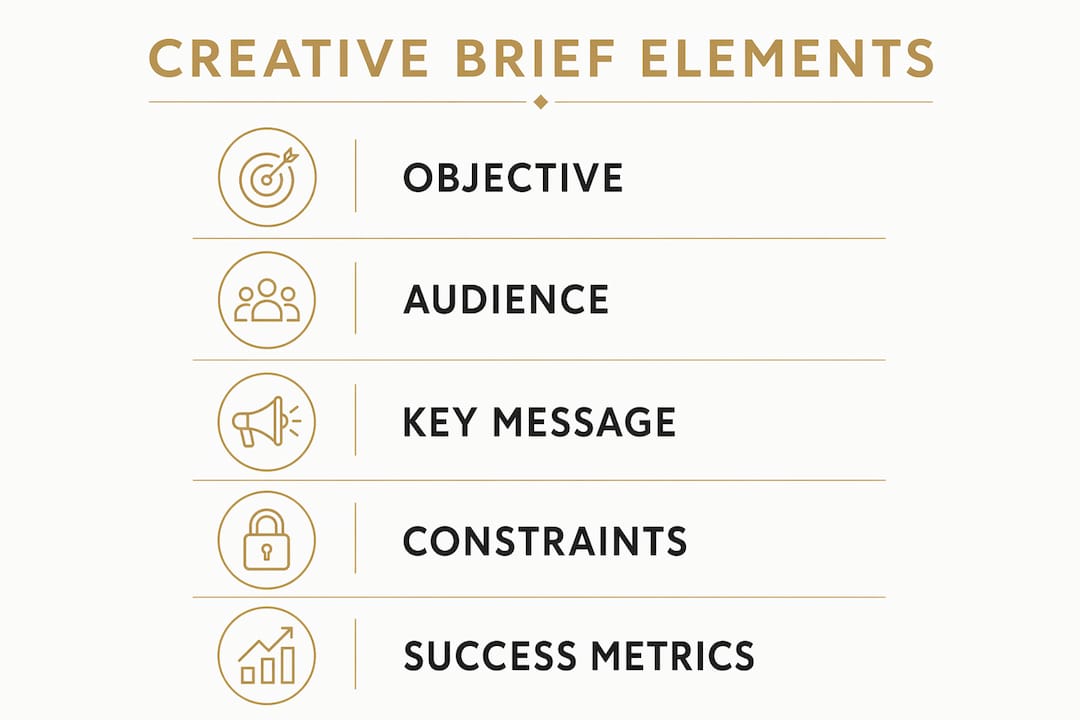
A creative brief captures the objective, audience, key message, constraints, and success metrics so creative teams can produce work aligned with business goals. Think of it as a roadmap with guardrails. Without it, designers, copywriters, and strategists each fill in the blanks with their own assumptions, and those assumptions rarely match.

The definition of creative brief also carries a length standard worth knowing: exceeding three pages signals ambiguity, not thoroughness. Conciseness forces prioritization. A brief that runs long usually means the strategy behind it is still unresolved.
What are the essential elements of a creative brief?
Every effective creative brief contains a core set of components. Each one guides a specific creative decision, so leaving any out creates a gap that the team will fill with guesswork.
- Project objective. State the single business goal this creative must achieve. "Increase trial sign-ups by 20%" is a goal. "Raise brand awareness" is not.
- Target audience. Define who the creative is speaking to, including demographics, behaviors, and what they currently believe about the problem.
- Key message. The one thing the audience should think, feel, or do after seeing the creative. One message. Not three.
- Tone and style. Describe the voice and visual register. Reference existing brand guidelines or provide examples.
- Single-minded proposition. This is the sharpest version of the key message, distilled to a single provocative idea. Failing to define this clearly results in unfocused creative work that tries to say everything and lands on nothing.
- Deliverables. List the specific outputs: a 30-second video, three static social ads, one landing page headline.
- Success metrics. Define how you will measure whether the creative worked. Click-through rate, conversion rate, and brand recall scores are all valid.
- Constraints. Budget, deadlines, legal mandatories, and platform specifications all belong here.
Pro Tip: Write the single-minded proposition last. Fill in every other element first, then ask: if the audience remembers only one thing, what should it be? That answer becomes your proposition.
A well-built UGC creator brief follows the same structure, with the addition of creator-specific guidelines around usage rights and posting schedules.
How does a creative brief differ from a marketing brief?
The confusion between these two documents is common, and it costs teams real time. A marketing brief is broad and business-focused. A creative brief is tactical and execution-focused. They serve different audiences and answer different questions.
| Dimension | Marketing brief | Creative brief |
|---|---|---|
| Scope | Full campaign or market strategy | Single creative execution |
| Primary audience | Leadership, brand, and media teams | Designers, writers, and production |
| Length | 5–15 pages | 1–2 pages |
| Focus | Business problem and market context | Creative output and audience response |
| Key question answered | What are we trying to achieve in the market? | What should this piece of creative do? |
Creative briefs sit between strategy and execution, translating the marketing brief's business goals into a precise creative direction. A marketing brief might define a campaign to reposition a product for a younger demographic. The creative brief then takes that goal and specifies the exact message, tone, and format for a single Instagram video within that campaign.
Understanding this distinction improves project outcomes because it prevents the wrong document from landing in the wrong hands. Handing a 12-page marketing brief to a freelance designer does not give them creative direction. It gives them a strategy deck they cannot act on.
Why is a creative brief critical for project success?
A creative brief functions as the communication layer between business strategy and creative execution. When it is missing or weak, every stakeholder interprets the project differently, and those interpretations collide during review.
A creative brief is diagnostic. If your team struggles to fill one out, that struggle is not a writing problem. It is a signal that the underlying strategy has gaps or unresolved disagreements. Fixing the brief forces you to fix the strategy first, which saves far more time than any revision cycle ever could.
The importance of a creative brief extends beyond documentation. It prevents subjective feedback. When a stakeholder says "I don't like the color," a strong brief gives the creative team a factual basis to respond: "The brief specifies warm, approachable tones to match the audience profile we defined." Without that reference point, feedback becomes a matter of personal taste, and revisions multiply.
Real consequences of weak or missing briefs include:
- Revision cycles that double or triple the original production timeline
- Creative work that performs well aesthetically but fails to drive the specified business outcome
- Stakeholder disagreements that surface during final review instead of during planning
- Organizational alignment issues that go undetected until production is already underway
The brief also serves as a living reference during the project. Teams that revisit it at each milestone catch drift early, before it becomes expensive.
Best practices for writing an effective creative brief
Writing a brief that actually works requires discipline. The goal is clarity, not comprehensiveness. Here is a process that produces briefs creative teams can act on.
- Start with the business objective, not the deliverable. The brief exists to serve a goal, not to describe a task. Write the objective before you write anything else.
- Involve the people closest to business data. Creative briefs should be written by marketing strategists or growth marketers, not the creative team. The people who own performance data know what the brief needs to accomplish.
- Define the audience response before the message. Ask: what should the audience believe or do after seeing this? The answer shapes the message, not the other way around.
- Write the single-minded proposition in one sentence. If it takes two sentences, it is two propositions. Cut one.
- Keep it to one page when possible. A brief exceeding two pages typically signals low prioritization skills and reduces creative clarity. Distill, do not dump.
- Treat it as a living document. Creative briefs used for organizational buy-in and evidence-based feedback should be revisited and updated as the project evolves, not filed away after kickoff.
- Avoid the deliverable-list trap. A brief that lists outputs instead of articulating why the creative exists produces poor alignment and ineffective outcomes. The "why" is the brief's most important job.
Pro Tip: Run a one-question test before distributing the brief: could a talented creative who knows nothing about your company read this and produce the right work? If the answer is no, the brief is not done.
A creator cross-promotion checklist can complement the brief when the project involves multiple creators or co-branded content, keeping objectives aligned across all parties.
The brief is a conversation, not a contract
Most marketing teams treat the creative brief as a handoff document. Write it, send it, move on. That approach misses the point entirely.
The most effective briefs I have seen come out of a 30-minute conversation between the strategist who wrote it and the creative team who will execute it. The document creates the structure. The conversation fills in the texture. A designer who understands why the brief specifies a particular tone makes better decisions than one who simply follows instructions.
The other thing teams consistently underestimate is how much the brief reveals about their own strategy. When a team cannot agree on the single-minded proposition, that disagreement is not a brief problem. It is a strategy problem that would have surfaced anyway, just later and at greater cost. The brief forces that conversation to happen at the right time.
Weak briefs also produce a specific kind of bad feedback: subjective, personal, and impossible to resolve objectively. "I just don't feel it" is not feedback you can act on. "This does not match the tone we defined for this audience" is. The brief gives everyone a shared language for evaluating creative work, which makes the entire review process faster and less frustrating.
— Brian
How Blackx helps brands and creators align from the start
A creative brief sets the direction. The deal structure around it determines whether that direction holds through delivery, payment, and revision.

Blackx is the contract intelligence layer for the creator economy, built to give brands and creators the infrastructure they need to turn a brief into a binding, clear agreement. When the creative direction is set, Blackx for brands provides the tools to formalize scope, deliverables, and approval workflows so nothing gets lost between the brief and the final asset. For creators, Blackx's deal infrastructure makes it straightforward to confirm project terms, protect usage rights, and get paid on time. Clear briefs and clear contracts work together. One without the other leaves room for misalignment that costs both sides.
FAQ
What does a creative brief mean in simple terms?
A creative brief is a short document, typically one to two pages, that tells a creative team what to make, who it is for, and what it needs to accomplish. It aligns everyone on the project before production starts.
Who should write a creative brief?
Marketing strategists or growth marketers closest to business objectives and performance data should write the brief. The creative team executes against it but should not author it.
How long should a creative brief be?
One to two pages is the standard. A brief that runs longer than two pages usually signals an unclear strategy, not a thorough one.
What is the difference between a creative brief and a marketing brief?
A marketing brief covers the full business strategy and campaign context, often running 5–15 pages. A creative brief is a one-to-two page tactical document focused on a single creative execution and its specific audience response.
What happens if you skip the creative brief?
Skipping the brief leads to misaligned creative work, subjective feedback that is hard to resolve, and revision cycles that extend timelines and budgets. The brief prevents these problems by establishing shared expectations before production begins.