
TL;DR:
- An Instagram creator contract is a formal written agreement that defines deliverables, payment terms, usage rights, and legal obligations in brand collaborations. Creators should negotiate key points like usage duration, sublicense limits, and ownership rights to protect their content and interests. Using a structured contract helps ensure clear communication, fair compensation, and compliance with platform rules.
An Instagram creator contract is a formal, written agreement that defines your deliverables, payment terms, content usage rights, and legal obligations when partnering with a brand on the platform. These agreements are the legal backbone of every paid collaboration, from a single sponsored Reel to a six-month ambassador deal. Formal written agreements appear in 78% of successful creator brand partnerships, including gifting campaigns. That number tells you one thing clearly: brands that take partnerships seriously put everything in writing, and you should too.
How Instagram creator contracts work: the core structure
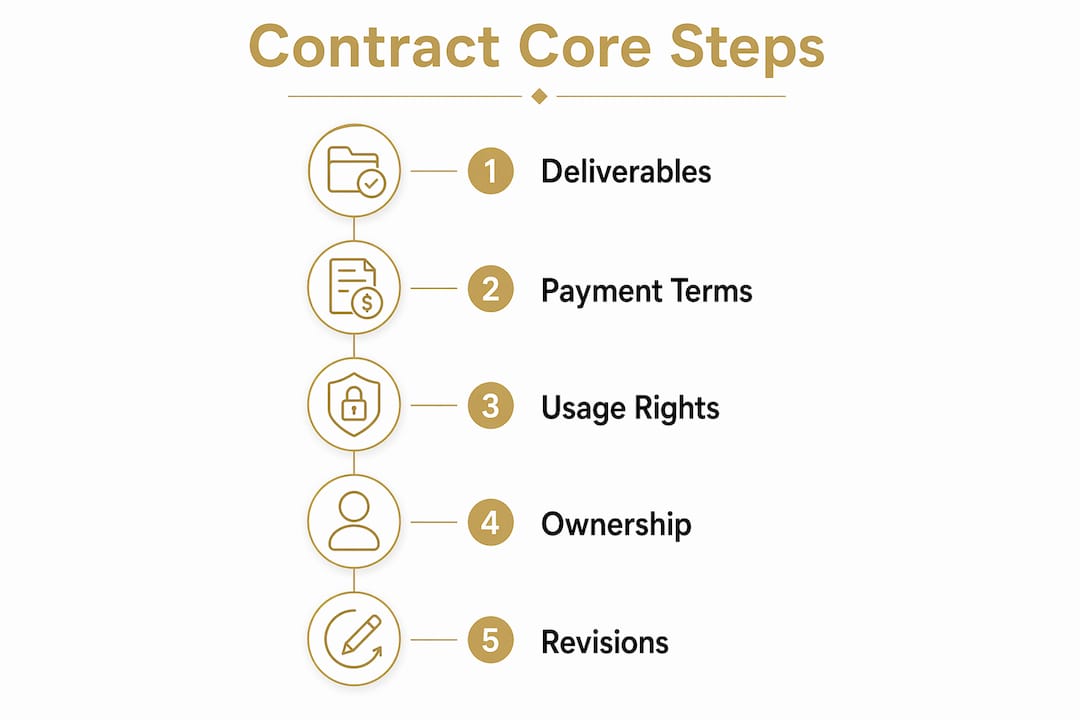
An Instagram influencer agreement is built around five core components. Each one protects a different part of the deal, and missing any one of them creates room for disputes.

Deliverables define exactly what you will create. A well-written contract specifies content type (Reel, Story, carousel, static post), quantity, posting schedule, required hashtags, disclosure language, and caption guidelines. Vague deliverables like "two Instagram posts" are a red flag. The contract should state whether posts must be permanent or can be archived after a set period.
Payment terms cover the total fee, deposit amount, payment schedule, and late payment penalties. The industry standard payment split is 50% upfront and 50% on approval or posting. This structure protects both sides.
Content usage rights are where most creators get burned. This clause defines which platforms the brand can use your content on, for how long, and whether they can run it as a paid ad. Usage rights clauses should always include clear start and end dates. A perpetual license means the brand can use your content forever, which limits your future monetization options.
Ownership and IP clarify whether you are licensing your content or transferring copyright entirely. Payment alone does not transfer ownership. Only an explicit IP assignment or work-for-hire clause moves copyright to the brand. Everything else is a license.
Approval and revision policies set the number of revision rounds allowed, the brand's review window (typically 48–72 hours), and what happens if the brand misses a deadline. Cancellation terms should also appear here, including kill fees if the brand cancels after content is created.
Pro Tip: Ask for a revision cap in writing. Two rounds is the industry norm. Without a cap, a brand can request changes indefinitely at no extra cost to them.
How do payment schedules and rates work in creator contracts?
Payment structure is one of the most negotiated parts of any Instagram collaboration. Creators commonly request a deposit of 25%–50% before starting any content creation. That deposit protects you from completing work for a brand that then delays or refuses payment.
Payment timing is governed by net terms. Net 15 means the brand pays within 15 days of the invoice date. Net 30 means 30 days. Most brand finance teams default to Net 30, but you can negotiate Net 15 for smaller deals or first-time partnerships. Late payment interest of 1.5% per month is the standard penalty. Include it in every contract you sign or send.
Content format also affects your rate. Instagram Reels are often priced 30% lower than permanent feed posts because their reach depends heavily on the algorithm's discovery cycle rather than your follower base. A brand paying for a Reel is betting on organic reach. A brand paying for a permanent feed post is buying placement on your profile. Price them differently.
| Content type | Typical pricing tier | Notes |
|---|---|---|
| Permanent feed post | Highest | Long-term profile placement |
| Instagram Reel | ~30% lower than feed post | Algorithm-dependent reach |
| Instagram Story | Lowest (short lifespan) | Often bundled with other formats |
| Whitelisting/Spark Ads | +20%–25% fee on base rate | Paid amplification rights |
Whitelisting, also called paid amplification or Spark Ads on some platforms, lets a brand run your content as a paid ad from your handle. Whitelisting can boost ad performance by 20%–50%. That performance gain has real dollar value. Charge a 20%–25% premium on your base rate when a brand asks for whitelisting rights. Many basic contracts omit this fee entirely, which means creators give away significant value for free.
Pro Tip: Always separate your organic content fee from your paid amplification fee in writing. One line item for each. Bundling them makes it easy for brands to claim whitelisting was included in the original rate.
Check out the content creator rate card guide for a deeper breakdown of how to price each format.
What are the key negotiation points in Instagram influencer agreements?
Brand contracts default to protecting the brand. That is not a criticism. It is simply how contracts work. Your job is to read every clause and push back on the ones that limit your rights.
The four main negotiation points in any Instagram creator contract are:
- Usage duration and platforms. A contract that grants "worldwide, perpetual, irrevocable" rights is a full IP handover in practice. Push for a defined term (6 or 12 months is standard) and a specific list of platforms.
- Sublicensing. Some contracts allow brands to license your content to third parties, like their retail partners or distributors. Prohibit sublicensing unless you are compensated separately.
- Work-for-hire vs. licensing. Work-for-hire means the brand owns the copyright from the moment of creation. A license means you retain ownership and grant the brand specific rights. Most creators should never agree to work-for-hire unless the fee reflects full IP transfer.
- Morality and reputation clauses. These clauses allow creators to terminate a contract if the brand's conduct harms their reputation. Brands include morality clauses to exit deals if a creator causes controversy. Negotiate for a mutual version that protects you equally.
Two common traps catch creators off guard. First, verbal agreements and DM confirmations are not enforceable contracts in most U.S. jurisdictions. A brand saying "we'll pay you $2,000 for two posts" over Instagram DM is not a binding deal. Second, engagement guarantees are a liability. Contracts should commit to "best efforts" rather than specific engagement numbers. Instagram's algorithm is unpredictable. Guaranteeing 10,000 likes exposes you to disputes you cannot control.
Pro Tip: If a brand sends you a contract with no revision limit, no kill fee, and perpetual usage rights, treat all three as non-negotiable. Any professional brand will accept reasonable pushback on these terms.
For a full clause-by-clause breakdown, the influencer contract guide at Blackx covers templates and FAQ for common scenarios.
How do Instagram's platform rules affect creator contracts?
Instagram's own policies create specific obligations that must appear in your contract. Ignoring them creates compliance gaps that can void a deal or trigger content removal.
The most common platform-specific requirements include:
- Branded content labels. Instagram requires the "Paid partnership" label on all sponsored posts. Your contract should confirm which account is linked as the brand partner and who is responsible for enabling the label before posting.
- Partnership tool access. Instagram's branded content tools require creators to link accounts and grant brand access within 24–48 hours after posting. Your contract should include this timeline explicitly so neither party is surprised.
- Link stickers in Stories. Instagram removed the swipe-up link feature and replaced it with link stickers. If a brand's campaign depends on driving traffic from Stories, the contract should specify link sticker placement, not swipe-up, to reflect the current platform reality.
- Algorithm performance clauses. Instagram's algorithm determines reach, not you. Any contract clause that ties your payment to reach or engagement metrics creates a dispute risk. Algorithmic protection clauses limit your liability for engagement fluctuations caused by platform changes.
Content format pricing also connects directly to platform mechanics. Reels live in the discovery feed and reach non-followers. Feed posts live on your profile and reach your existing audience. Stories disappear after 24 hours. Each format serves a different campaign goal, and your contract should reflect that difference in both deliverables and pricing.
The creator cross-promotion agreement checklist at Blackx covers platform-specific clauses in detail for 2026 deals.
What I've learned from watching creators sign bad contracts
The single most common mistake I see is creators treating a brand's first contract draft as the final offer. It never is. Brands send standard agreements because most creators sign them without reading. The moment you send a redline with specific changes, you signal that you know what you are doing. Most brands respect that.
The second mistake is undervaluing IP. Creators spend hours producing content, then sign away perpetual usage rights for a flat fee. Only an explicit IP assignment transfers copyright. Everything else is a license. If a brand wants to own your content outright, the fee should reflect that. A one-year license and a permanent IP transfer are not the same product.
The third mistake is skipping the morality clause negotiation. Brands include these clauses to protect themselves from creator controversy. Creators rarely push for a mutual version. A mutual morality clause gives you the right to exit if the brand faces a public scandal that could damage your reputation. That protection is worth the conversation.
Formal contracts are not bureaucracy. They are the clearest signal that both sides are serious. A brand that refuses to put terms in writing is a brand that plans to renegotiate after you have already done the work. Use tools like Blackx to manage your agreements from the start, not after a dispute has already begun.
— Brian
How Blackx handles creator contract infrastructure
Blackx is the contract intelligence layer built specifically for the creator economy. Creators who work with Blackx get a structured deal infrastructure that covers contract terms, IP protection, and payment management in one place.

The Blackx creator platform gives you clear contract templates built around the clauses that matter most: usage rights, payment schedules, revision limits, and platform-specific obligations. You stop relying on brand-drafted agreements that were written to protect the brand. Blackx puts the terms in your hands before the conversation starts. If you are serious about protecting your work and getting paid on time, this is where you start.
FAQ
What is an Instagram creator contract?
An Instagram creator contract is a formal written agreement between a creator and a brand that defines deliverables, payment terms, content usage rights, and legal obligations for a sponsored collaboration on Instagram.
Do I need a contract for every Instagram brand deal?
Yes. 78% of successful brand partnerships use formal written agreements, even for gifting campaigns. Verbal agreements and DM confirmations are not legally enforceable in most U.S. jurisdictions.
What is the difference between a license and a work-for-hire clause?
A license lets you retain copyright while granting the brand specific rights to use your content. A work-for-hire clause transfers copyright to the brand at the moment of creation. The fee for work-for-hire should be significantly higher.
How much should I charge for whitelisting rights?
Charge a 20%–25% premium on your base content rate for whitelisting or paid amplification rights. Whitelisting can boost ad performance by 20%–50%, which means the brand is extracting significant additional value from your content and handle.
Can I negotiate a brand's standard contract?
Yes. Brand contracts default to protecting the brand, not you. The main negotiation points are usage duration, sublicensing rights, paid amplification fees, and morality clause terms. Most professional brands will accept reasonable changes.